At the “Action in Hope” Mini-MBA Program in Odesa, Participants Mastered Business Modeling and Leadership Development Tools
July 14, 2026
On July 12 in Odesa, a lecture on business modeling was held as part of the second module of the educational mini-MBA program “Action in Hope,” organized by the Patriarchal Foundation “Mudra Sprava.” It was conducted by business consultant and organizational development expert Svitlana Buhai.
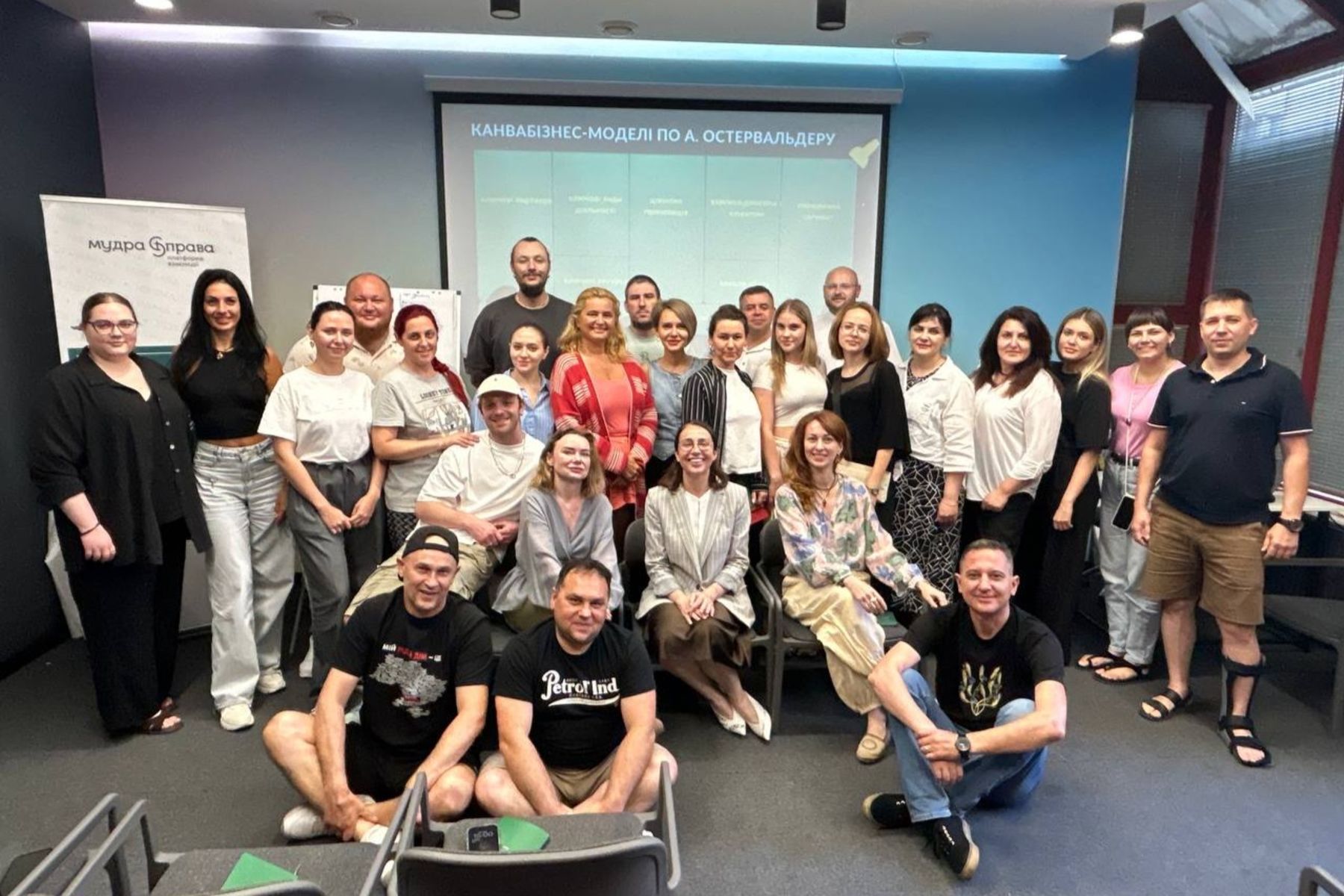
The participants included volunteers, heads of charitable organizations, business representatives, lawyers, doctors, educators, and community leaders working on developing their own projects to make them more sustainable and effective.
During the lecture, Svitlana Buhai emphasized that a successful project or business begins not with seeking funding, but with a clear understanding of its mission, vision, and values. These elements determine the organization’s direction, help build a team, and foster trust among partners and clients.
The speaker paid special attention to business model design. Participants worked with Alexander Osterwalder’s Business Model Canvas, analysing key resources, partners, value propositions, communication channels, customer segments, cost structures, and revenue streams. They also covered SWOT analysis tools, SMART goals, stakeholder mapping, and the Balanced Scorecard system, which help evaluate a project’s strengths and weaknesses and outline its growth prospects.
The practical part of the session was dedicated to developing management skills. Participants took the Thomas—Kilmann conflict mode instrument, which helps identify individual behavioural styles in conflict situations, and explored the approaches of American business consultant Adrian Slywotzky, which allow for rethinking value creation sources for customers and uncovering new opportunities for business or social initiatives.
A separate section of the lecture focused on personal effectiveness for leaders. Svitlana Buhai discussed goal-setting principles, time management, work-life balance, as well as the importance of self-awareness and emotional intelligence as essential components of successful leadership. To apply these concepts, participants examined Paul MacLean’s triune brain model, the Eisenhower Matrix, Gantt charts, and other practical planning and decision-making tools.
In conclusion, the lecturer encouraged participants to view business modeling not merely as a tool for building a profitable enterprise, but as a way to create lasting value for people and communities. According to her, sustainable development begins when a clear vision of the future combines with effective teamwork, strategic thinking, and a commitment to continuous learning.
Press Service of the Patriarchal Foundation “Mudra Sprava”