Another Module of “Action in Hope” Took Place in Samar: Participants Mastered Negotiations and Sales
April 20, 2026
On April 17–19, Samar in the Dnipropetrovsk region hosted the fourth module of the educational program Mini MBA “Action in Hope,” organized by the “Mudra Sprava” Patriarchal Foundation. Over the course of three days, participants deepened their knowledge in leadership, communication, and business practices under the guidance of Andriy Rozhdestvenskyy.
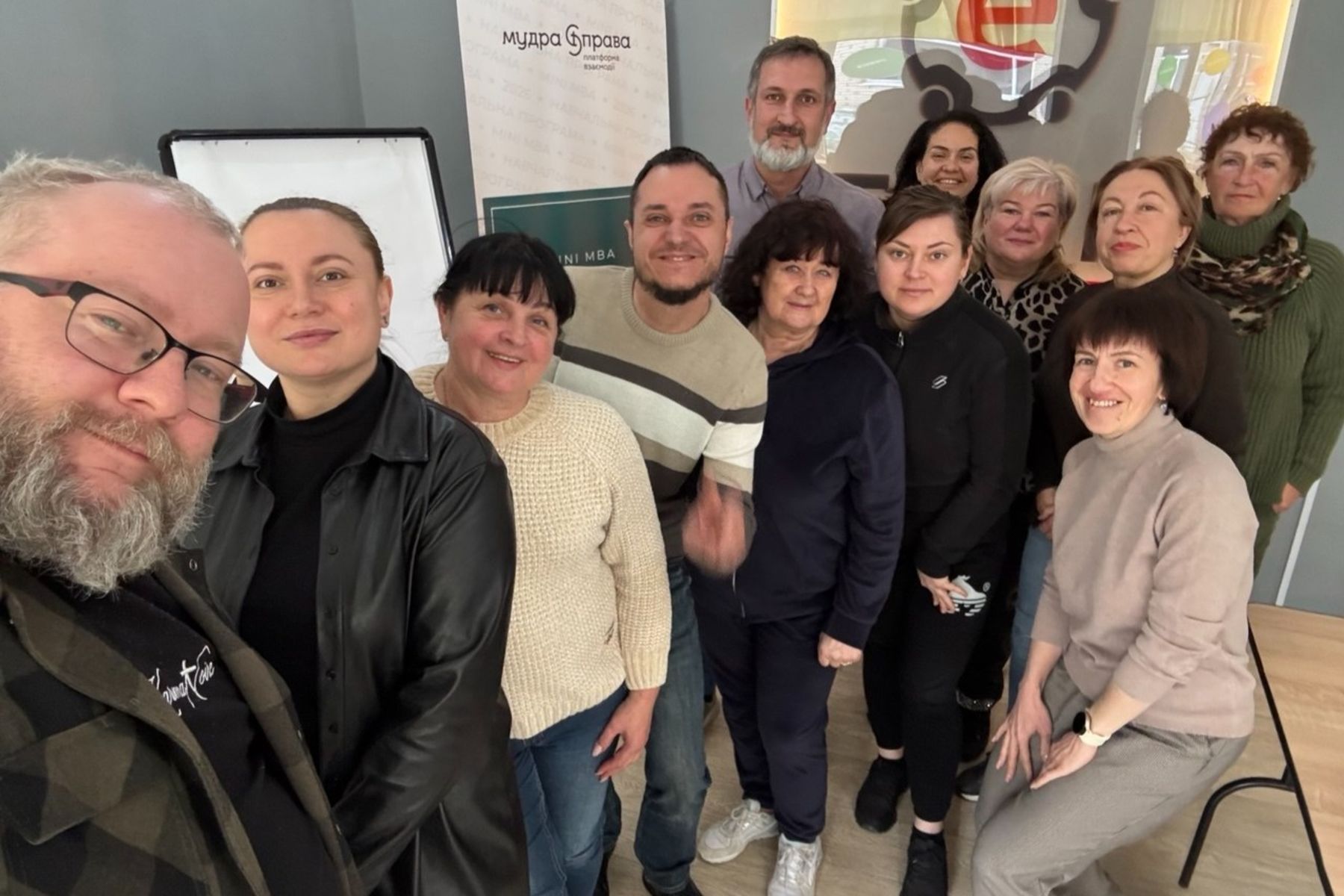
The second educational day was dedicated to the topic of negotiations. The lecturer introduced participants to the essence of the negotiation process as a movement from opposing positions toward a shared solution and presented the key stages — from preparation and discussion to reaching an agreement and subsequent analysis of results. Special attention was paid to preparing for negotiations: defining goals, interests, priorities, and potential objections.
Participants also examined various communication strategies — ranging from competition to collaboration (win-win) — as well as tools for influencing an interlocutor. It was emphasized that non-verbal communication plays a significant role in perception, while words constitute only a minor part of the impact. A separate block covered active listening techniques, the ability to ask questions, and working with objections, particularly following the “aikido” principle — by accepting the interlocutor’s position and gently guiding the dialogue.
The third day of training focused on the topic of sales. Participants concentrated on the benefit principle — understanding customer needs and forming a value proposition that meets those needs. As the lecturer emphasized, it is crucial to “sell the result, not the product,” meaning the ultimate benefit to the person.
Working with objections was also reviewed as an integral part of the sales process: from careful listening to a reasoned response using facts, statistics, and logical arguments. Participants became acquainted with various types of arguments and persuasion approaches, as well as the challenges of so-called “hard negotiations” that may accompany the sales process.
The final accent was placed on finalizing agreements and controlling their execution. The lecturer stressed the need for a clear division of responsibilities, written confirmation of decisions, and subsequent monitoring of their implementation as a guarantee of effective cooperation.
The educational module served as an important stage in developing the participants’ practical skills aimed at effective communication, reaching agreements, and growing socially responsible entrepreneurship amid modern challenges.
Press Service of the Patriarchal Foundation “Mudra Sprava”